Recounting Grace

On the day our nation OKs our outward signs of gratitude
We remember the gifts we’ve inherited
Freedom, Health, Family, friends, and Wealth,
Were these really so stealth on all the other days?
Or are really so trapped by those voices, we keep our thanks wrapped?

More than all the grains of sand on earth
Are the ways in which you’ve made You known
How could I possibly keep track of their endlessness?
Can even the night lights analogize your fathomlessness?

So she greets me this morning and tells me she loves me.
She lay beside me as I slumbered
She keeps me company through all my days
And shows me affection in so many ways.

Just like the night stars whom embody your grace
She captures more than I can possibly say
Her touch reminds me of your provocative incarnation
And her voice sings my favorite invocations

Within this union beats the sweetest of songs
A reflection of heaven from which our soul longs
She is that, which I am most grateful
As she is a story of how you’ve been faithful

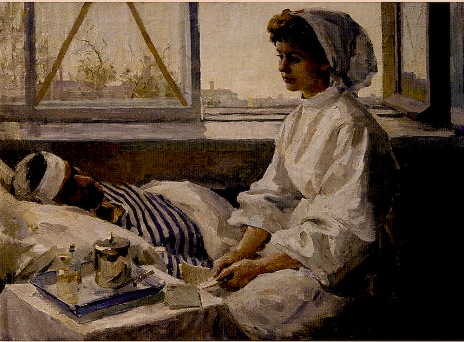
To my wife (and all other nurses)

“The trained nurse has become one of the great blessings of humanity, taking a place beside the physician and the priest.”

– William Osler

My wife is amazing.  Seriously.  At some point during high school she felt a tug in her heart to make a difference in the world; to serve people and show God’s love.  For her this was embodied in the idea of being a nurse.  So, after high-school she got into a great college for nursing and completed what is according to many, the most challenging bachelors degree in America.   The work load, catheters, bed pans, and  psych patients didn’t phase her, as she was soon hired at a hospital in Southern California.

Between the hours of 7:00 pm and 8:00 am she’ll be found running from room to room checking on her patients as they are nursed back to health.  Some of her patients are crazy and some are endearing.  Sometimes she has to help them go to the bathroom, and sometimes she is there when they go into “Code Blue”.

It absolutely blows me away that while I’m at home studying or watching TV, she’s there; dealing with pain, body fluids, brokenness, confusion, and everything in between.

Being there, in the most humble and intimate times, ever present in the frailty and vulnerability of humanity, she finds herself, night after night.

Divinely, she contemplates the story of each individual, as their family comes to visit, or sometimes is altogether absent.

Checking their paperwork, she dutifully tries her best to be fully present in the practicalities as well as the personalities.

Bravely, she deals with impatient patients, jaded doctors, and checked out staff.

Tirelessly, she cleans soiled bed-sheets, administers medicine, consults doctors, and answers countless questions.

Caught in the tension of seeing every person as just another name on a chart and the Imago Dei, she becomes prayer.

Is there another vocation as selfless as nurse?  They are there in our lowest, in our sickest, in our least glamorous moments, and even in our last breaths.   They do what is within their reach to ease our pain.  They are tasked with the burden of listening, discerning, observing, and deciding.

To my wife and all my nursing friends,  you have been given the most noble of jobs.  You have the opportunity to care for people like no one else can.  What is required of you in compassion, stamina, intelligence, sharpness, and love is like no other job.  It is a thankless and often times gross way to make a living, but that is what makes it blessed.  A nurse in other words, is simply a servant.  Your relationships with your patients are one-way, self sacrificing endeavors.  You are healers, listeners, dignity-givers, pain-relievers, advocates, and friends.

When I think about my own health,  and its inevitable expiration, and when I reflect on the last days of loved ones under professional care, I am convinced that a nurse can be there for people like no one else can.  Your job, while at times it may not feel like it, is nothing short of a divine calling.

Thank you for the inspiration.

Please don’t forget about me! (How Timeline pierced my soul:)

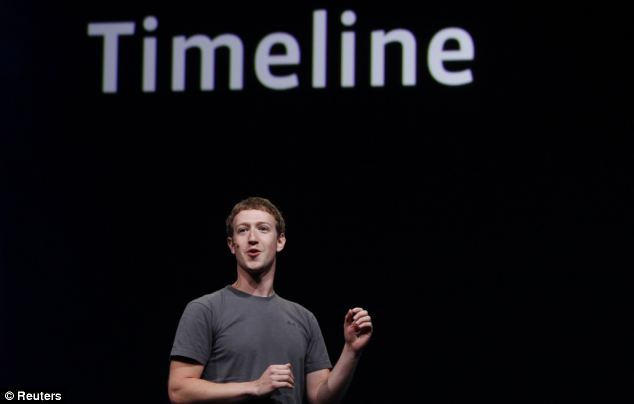
This morning I woke up and did what I do most mornings, I ground some Jones coffee beans while I checked my facebook page for updates.  My waking eyes were drawn to the announcement of a brand new facebook service called Timeline.  I took the bait and got sucked into a fantastically communicated webpage chalked full of cool videos and hip font.  It didn’t take long for me to to get the “longing butterflies” (you know the excited feeling in your gut when you want something new, kind of like the “Christmas Eve bubbly’s”, or the “on-the-way-to-the-store-to-buy-something-new-and-cool-buzz”).  Essentially, the application works as a timeline of your entire life, done in the most sophisticated and media savvy fashion.  You can post pictures of yourself, highlights of your life, favorite quotes, formative moments, movie clips, and more all in chronological order from cradle to grave.  Anyone looking at your timeline can not only see who you are, but see your entire life story.   It’s pretty cool.

As I realized how I really wanted a Timeline of my life to show off, I started asking myself why.  It seems like more and more we’re striving to not only be known and remembered, but to attain significance.

—-

Recently I was jogging on a trail where I used to live.  The trail winds itself along a creek, crossing over the babbling stream periodically like a grapevine wraps around a trellis, through a series of wooden bridges.  The final bridge floats over the water in an area completely inclosed by trees, creating the feeling of a room or canopy.  Usually I pause for a moment here, to catch my breath, as the oak branches above protect me from the sun, and the flowing brooke below calms my mind.

One time as I silently stood in this spot I noticed an engraving on the wooden rail of the bridge.  It read “Eric Stevens was here, 2005”.  Some one wanted to leave their mark and be remembered, literally, I thought.

There seems to be a pattern in our behavior.  We want to be known.  We long to express the fact that we were here or there at one point in time – and it seems to be intrinsically woven into who were are.

—-

Why do we long so desperately to be remembered?  Why do we build intricate websites, construct companies, erect buildings, and carve our name onto trees?  What does this tell us about ourselves?

It doesn’t take long for one to look around at human culture and come to find that the desire to be remembered is a driving force behind so much of what we do.  A few weeks ago  we remembered the ten year anniversary of 9/11.  One of the most well known sayings or slogans I’ve seen on bumper-stickers and I heard that weekend is “Never Forget”.   It’s as if to us, the greatest tragedy of all would be that we would forget.   To forget about someone is as if they never existed.  Deep down the possibility of this fate, being forgotten, being unknown, being insignificant, haunts us.

So we build, write, accomplish, and conquer all with the hopes that others will know our name, providing our hearts and souls with the significance we urgently long for.  We tweet, post, and comment, waiting for a reply, waiting for someone to bear witness that we were here.

As I processed this seemingly essential characteristic of us humans I found a few ideas that I hope we can cling to in all of our striving to be remembered:

First is the idea that within each of us is the potential of offering relief to one another as we frantically attempt to leave a legacy. If each of us truly desires to be known by others, this means we are actually the remedy for those around us.  What if we lived lives that bore witness to the stories of one another by being present and intentional about knowing people?  This means listening, thinking about, and caring for others in a way that goes beyond just hanging out.  It means getting deeper, to the level within a person where you begin to know who they really are, both scars and strengths,  and choosing to celebrate their story.  I think if we begin to shift our focus from making sure our story is remembered, to bearing witness to the stories of others, we will begin to find a different level of significance that may in fact provide some relief to our neurotic and selfish legacy building endeavors.

Secondly, is the provocative concept that we already are remembered in a way that goes beyond what any Timeline page or name engraving can or will ever accomplish.  Our lives, every single aspect and moment of them, from our names to each one of our hairs, is known and cherished in the heart of God.  This is what is essential to Christian teaching, that before we even knew oursleves, or before we were even followed on twitter, God knows us.  He not only knows us, but he cherishes us.  He not only cherishes us, but he weeps for and with us.  He not only weeps for us, but he bleeds for us.  The core message of Christianity it that the most significant and important voice in all the realms and in all of history became a humble human and gave himself away.  Not only does he collectively choose to bear witness to all humanity, he personally and specifically and intimately knows each person.  I don’t know about you, but being known and loved by God far outweighs any sort of ego boost I might get by being known and remembered by others, and this is the foundation I hope we can build our significance on.

In conclusion:

It seems to me that all of our desires and longings to be known are in fact insatiable.  No level of wordly accomplishment or recognition will ever be enough.  It will take something other-worldly to satisfy.  How humbling the notion is that we are already remembered before we even tweeted or accomplished anything.

Here is a link to the Timeline introduction I watched this morning:  Timeline

The danger of our market based churches (and spiritual warm-fuzzies)

For the past 8 or so years I worked for a medium/large contemporary church.  I loved my position, I believe in our cause, and I admire the community.  I can’t wait to be back.  While being engaged in church work for a time I began to see some patterns among church-goers and the church structure itself that I never felt comfortable bringing up.  Sadly, the Kingdom oriented body of church has become enamored with the business principles of markets. Because the organization of church operates on donations, and donations come from people, churches compete for the finite number of people in a given area.  We design and build programs to entice people to come to our services.  The winner ends up being the church who can have the coolest building, most inspiring speaker, and provide the congregation with the highest amount of “spiritual warm-fuzzies” (self focused, emotionally charged moments).  In so doing we lose sight of what makes us a global and historic community, we demonize our competitors, we starve and stunt our intimacy with the divine, and we encourage the consumption based approach to being a part of a church family.  Congregants no longer see church as a privilege or as a family, but rather a place to spend their “spiritual capital”, where the market of churches must prove that it’s deserving of a person’s time and contribution.  Usually the coolest, slickest, biggest church wins while the health of the larger community suffers.

Why it wounded me

In my time at our church I watched many families and friends become caught up by their consumption based appetite for spirituality, leading them away from our community (which was at one time the hip/cool/cutting edge church), to a church down the road that had a younger speaker and Starbucks coffee.  To be honest, it usually hurt when people left.  Some of those relationships were years old, filled with memories, personal investment, prayers and time.  Sometimes their move was veiled underneath an apparent frustration with the lack of “depth”, or a “questioning of leadership” but was usually just about feeding the hunger for “warm-fuzzies”.  While some issues are valid to bring up, their approach to resolving their frustrations was typically immature at best.  Instead of finding a way to serve and get more involved, or have a conversation with leadership they just left.  Just like a middle school dating relationship, one minute they were singing the churches praises, the next they were MIA, with no explanation offered.  What’s most frustrating is that many of these individuals were significantly impacted by the church, often it was the place that first welcomed them into a faith community, and for many it was the place they became Christians in the first place!  Unfortunately, most of those people were amnesic when it came to how their faith began in the first place and the immeasurable amount of sacrifices others have made to make that possible.  It’s like the suburban kid who was given everything and then in their teenage years complains that they have nothing.

Family vs a Show

This is not how family works.  Your family is something you cannot just get up and leave, or at least you shouldn’t.  It seems like modern social phenomena like divorce and child abandonment are seeping into the way we view our commitment to a church community.  If you aren’t feeling infatuated with your wife anymore, then it has become socially acceptable to trade her in for a new model.  This appears to be true with the modern american church as well.  Lost are the long-term commitments and scars that come from years of being intrenched with a certain group of broken people and their needs.  Instead we’re continually occupying ourselves with the surface layer, light shows, pop songs, and shallow 5-minute conversations.

Everyone suffers

When we choose the best sound systems, shows, and convenience over the challenge of remaining committed to a relationship with a church long-term, everyone suffers.  The health of the church suffers, the new-comers who might learn from the more seasoned congregants suffer, and the next generation suffers.  At one point during my time working with kids I had a student in my group who was connected and growing.  He was actively pursuing his faith beyond just showing up to the service on Sunday mornings.  Even though this young man seemed to be thriving, his parents seemed to be bored with the adult service.  Instead of finding ways to get more involved, to serve, or to “self feed” (something I believe we’ve neglected in training altogether in favor of getting more and more people to just show up), they just up and left after years of friendship and memories.  Naturally this hurt.  I had gone above and beyond to reach out to the student and his parents, but regardless of this, they saw church not as a family, but as a commodity to consume, and we weren’t the best product on the market anymore.  A few years later, after consistently trying to reach out to this student, he showed up and described how he has neglected his faith, mostly because he didn’t have the same depth of relationship with anyone at his new church.  Even though I really like the church he was going to with his folks, any church without community is powerless.

Who’s to blame

As I reflected on this, both then and now, I think the blames first lies with the larger church.  Leaders, cross-generationally, cross-culturally, and cross-denominationally, need to come to terms with the fact that to a certain extent, we are perpetuating the consumption based church model.  Once the leaders stop putting on commercials each week and start communicating the value of church as it is, in addition to what it means to be covenentally committed to a church community, then we can address individuals when they leave the church for reasons of vanity.  With this said, I also think that the blame lies with the individuals who have not done the work of remaining connected to a church even through rough seasons, making the church your family.

So what do we do?

I think it’s time to stop seeing church as a spiritual buffet, where we can sample everything we want, and continuously consume.  It’s time we pick one community, accept it for it’s inevitable flaws, and grow roots in the trenches of our new family.  When leadership changes arise, when programs get cancelled, or when we stop feeling the “warm-fuzzies”, we should remain committed, and it is then that I believe we we reap the fruit of weathering through storms that will most certainly come, realizing deeper intimacy with our church family, ourselves, and our God.

USA vs. Mexico

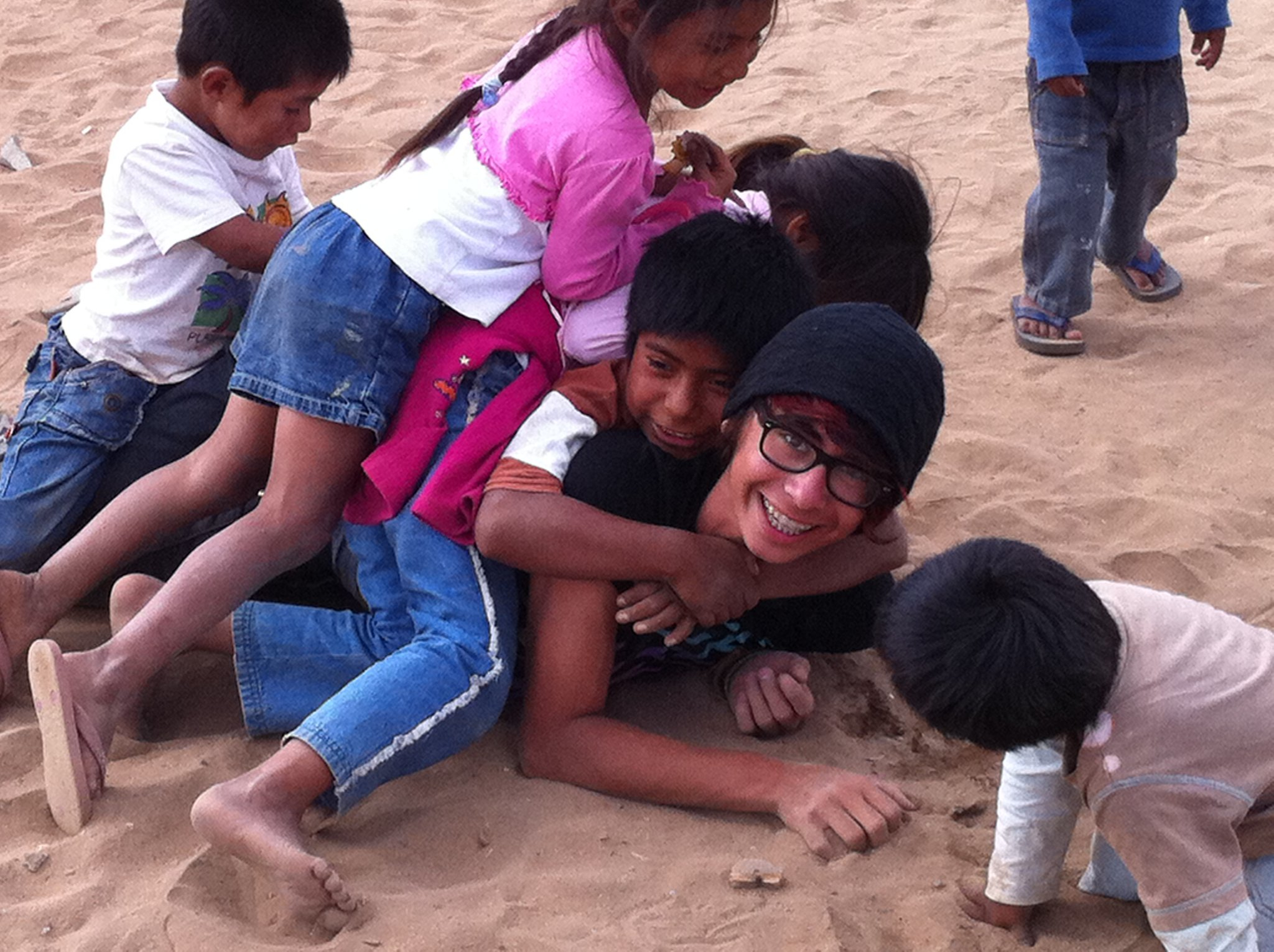
I recently returned from a brief trip to Vicente Guerrero, Baja.  I’m writing this post to recap a couple quick reflections and process one big lesson.  Traveling with a group from my home church in the Bay Area, we worked at a local mission who runs a school, clinic, surgery center, orphanage, church, soup kitchen, orchard, farm, paramedic distribution center, and rehab.  It was a blessed time.  During the day we worked in the fields picking weeds and tilling the soil.  At night we reached out to the community by giving food, supplies, and encouragement.  Here are a few thoughts on the week.

Watching people grow is friggin awesome.  The biggest factor contributing to my participation in this trip was the opportunity to go with one of the kids from STUFF who had been in my small group for the past few years.  Watching this young man grow, be challenged, wrestle with the poverty/wealth discrepancy, and try and see God in the midst of it all not only filled me with pride, but convicted me as well.

I felt out of sync.  Maybe it was because this was the first time I was away from my wife in this early infancy of our union, maybe it was my unfamiliarity with the language and culture, or maybe it was my ego that wasn’t used to being a follower, but I felt out of sync.  Sometimes feeling out of sync or uncomfortable is a good thing, it makes us see things inside of us we don’t normally see.

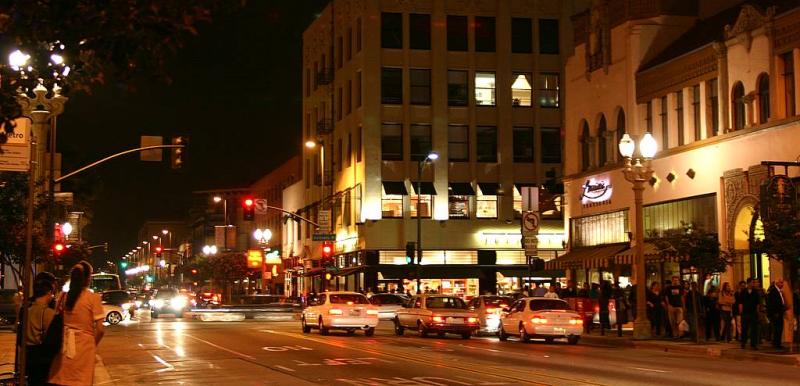
When it comes to hiding our issues Americans win.  As Americans we often think of  people from other places as different and often less fortunate.   But what if we were actually the same, and the difference is in how visible our desperation actually is?   In America we love making ourselves as presentable as possible.  Our glamorous and vein philanthropy easily notices the speck in our neighbors eyes all the while overlooking the plank in our own.  You see, we’ve covered our plank up with make up, smiles, and slogans.  We look around at everyone else living just like us and we assume that we’re doing alright, when the truth is we’re hurting.  Mother Teresa, after years working with some of the most impoverished people in the world while in Calcutta, said: “The most terrible poverty is loneliness, and the feeling of being unloved”. Her words break the commonly held paradigm that poverty is over there, in the third world, or in the urban center.  While surely, there is urgent truth to desperation of hunger, homelessness, and famine, if we only see the unbathed and unfed as the ones in need we’re only seeing part of the picture.  On my first day being back I found myself strolling down a busy Pasadena street watching the shoppers walk by and I asked myself, “what is different about us Americans from my new friends in Baja?”.  As I watched people walk right passed beggars and discuss their latest fashion I realized that the biggest difference is in our inability to see our own poverty.  Simply put, we are better at covering up our needs, and we make ourselves feel better about our situation by referencing ourselves against the “true” poverty in other parts of the world.  Every time I travel to less materially developed places I’m always challenged by how happy everyone seems to be. How can this be when they don’t have homes, TVs, cars, health insurance, or retirement plans?  Maybe Jesus was right when he said that the poor were the ones who were truly blessed after all.  Maybe we’re the ones that need to be saved from our poverty.

The danger of a solid economy

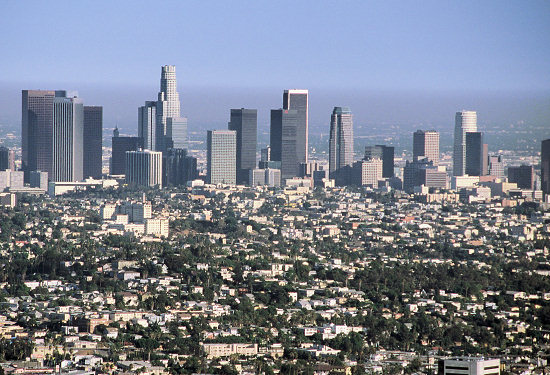
Downtown Los Angeles.  Tallest Buildings: US Bank, Citi Bank, Wells Fargo , Bank of America.

“They didn’t want to risk the hazard of depending on an invisible God. They wanted the security and stability of a solid economy”

-Eugene Peterson, Run with the horses

Somewhere along the way we lost it.  We made the focus point of our lives that which was supposed to be a means, not an ends.  We oriented our entire life course around an invisible entity called the economy.  Our unwavering thirst for certainty was quenched by the facade of temporary success, wealth, and boom-times.  We thought our forward progress and endless projects were limitless.  The population exploded, real estate sky rocketed, and we drank the punch.  We got so inebriated that we deemed our selves Kings, Queens, and CEOs.  We were dictators of our own destiny, entrepreneurs of our own eternities, and investors in our own invincibility.  Our sacred worship revolved around consumption chapels, shopping masses, and salvation banks.  The tallest buildings in our land became the loaning institutions convinced that there was no limit for this new Tower of Babel, we could just build, construct, and take out more loans.  We looked around at our neighborhoods and communities and convinced ourselves of our relative modesty, justifying our latest purchase, all the while destroying, burning, and overworking the health of both land and labor.

I’m convinced that in our worship of consumption, we lost our way.  As this house of cards begins to shake under the weight of our over draft and bankruptcy, our response is anything but corrective, instead we fought.  We close our eyes and cover our ears, desperately hoping our time in material excess and obesity isn’t eclipsed.  We’re franticly trying to equate solutions and strategies to appease our economic deity.  Do we cut or spend more?  Do we borrow or consolidate?  Just don’t take away all that we know – our security!

All of our neurotic math and political debate only prolong our slavery.  We’re in so deep this drunken stupor that we can’t see where we went wrong.  Depression hits when all that we knew is taken, the things we once received our identity, value and worth from.  But take heart, for those things never actually possessed the capacity to bring meaning to our life, they mostly just confused us.

Could it be that the best thing for us is actually uncertainty?  That this is where life truly awakens us to our perpetual selfishness and misguided worship?  Frankly, we worship what we focus on, and we become the merits of what we worship.  For far too long we have worshiped progress, consumption, and security, things that aren’t inherently bad, but shouldn’t be confused with what actually gives breath to life.  What if we welcomed uncertainty and allowed our economic instability to teach us?  What if we embraced challenge and failure as the means to being a better person?  What if our goal was not the stability of a solid economy, but the awakening of our true humanity?  What if our focus was not comfort, but faith?

Maybe it’s easy for me to suggest, as I was not a big loser in the recent economic downturn, but even still, as I survey the earth and what we done with it, I’m convinced it was only a matter of time before we sobered up, and our jenga tower of debt and greet collapsed.  To this I raise my glass and offer a prayer that we will not forget the poor in the midst of our own wealth shrinking, as this will gage where our heart is fundamentally oriented.  If we focus on maintaining our nest-eggs, and increasing our wealth, the greatest lesson will be lost – we’ll only be patching worn and torn bed sheet with paper! Let’s not seek to hold on to what was never ours in the first place, only to miss out on the real treasures of life.

Cities, Cities, Cities

Three weeks ago or so we moved to a brand new town, Pasadena.  Pasadena is a great city with loads of history, rich culture, descent diversity, and tons of activity.  It’s been a blast getting our “lay of the land” as we find a church, locate our favorite pub, adventure new trails and parks, and get plugged into a new community.  So far Pasadena feels like a “big, little city”.  It’s got plenty going on but doesn’t feel too overwhelming.  Sometimes I think we over-glamorize the city experience and prioritize it before things like family, relationships, and community; which for my money, are what makes a place actually valuable – but for the sake of this post, lets pretend like we could take everyone with us!

As is my first time moving to a new area long term, it got me thinking more about moving to other cities and these questions, I’d love to hear from you!:

What is the number one city I would love to live in?

What factors make it my top pick?  Culture? Scenery?

Once in a new community, what are the first places you need to find?  Grocery stores?  Hair salons?

If I was given a kick-butt job as a high paid casual blogger anywhere in the world, and I could chose the city in which I would live for a time, these are my top choices:

1) San Francisco.  There is just no place like the city by the bay.  I know it’s close to my home town, but I’m just being honest!

2) Auckland.  It’s culturally similar but filled with a plethora of new experiences.  I’d love to be able to explore Kiwiland and all the scenery that made movies like Lord of the Rings possible as well as learn about the rich Moari history.


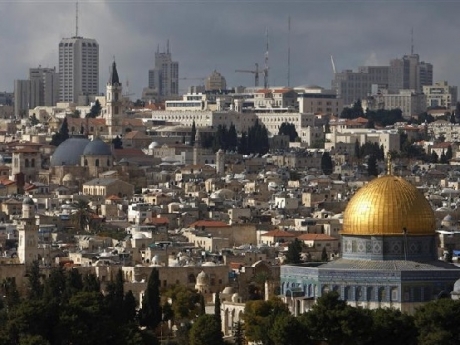
3) Jerusalem.  How crazy would it be to live in the epicenter of such significant history and culture?  To walk the steps of Christ, Peter, and Paul.  To imagine the wars and conflicts?  To bear witness to the ever present tension?


4) London.  I’ve heard that The Old Smoke is still considered the most influential city in the world.  I can’t imagine what it would be like to live where C.S. Lewis wrote, where Churchill spoke, and where Banksy paints.


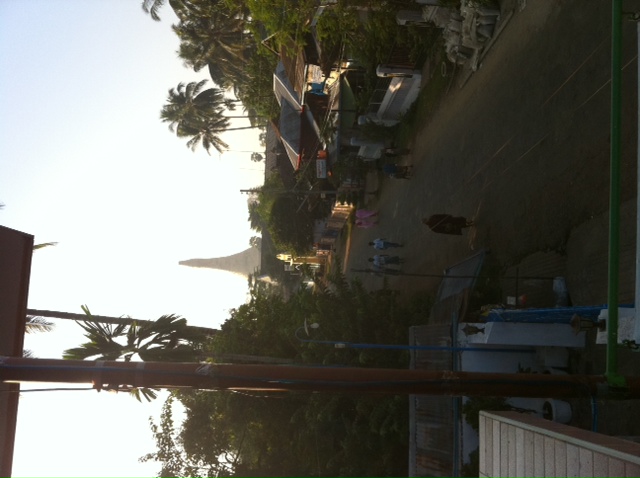
5) Thaton, Myanmar.  For personal reasons it would be amazing to spend some time in a place that I love with some people who mean so much to me.


6) Varanasi, India.  Mark Twain once said that this city is “older than history”.  Nestled on the banks of the Ganges and representing one of the most holy sites for Hindus, it would be amazing to spend some time exploring, learning, and changing.

Now it’s your turn.  Where would you live if you could live anywhere in the world, why?

“There’s nothing past this” -Really!?!?

Photo by Dom Henry

“That when our hearts stop ticking
This is the end
And there’s nothing past this”

On the outside valley walls surrounding the Rose Bowl in Pasadena, through my iPod headphones, on a morning jog, I heard those lyrics and was immediately  shot into an internal conversation of voices, thoughts, doubts, prayers, and inklings.  The trail I traversed provided the perfect space for the existential-yet-urgently-practical debate I had with my brain as my feet shuffled on the earth that I came from, and will one day return to, and my skin embraced the sun’s life giving heat.

Let me start by citing the lyric.  It comes off of Death Cab For Cutie’s latest album Codes and Keys. I really like DCFC.  They’re not my favorite band by any stretch, but I’ve always just enjoyed their stuff.  Benjamen Gibbard’s lyrics and writing have been the soundtrack to many moments in my life, not limited to Death Cab For Cutie, plus he’s married to Zooey Deschanel, how awesome is that!?  Like I said, I really enjoy their stuff, but that lyric got me thinking.

“There’s nothing past this”

How can we know there is nothing past this life?  Isn’t that just as arrogant as suggesting for certain that you know EXACTLY what happens after death?

It’s been extra apparent in recent months that it’s hard to make claims about the afterlife, that no one really knows what remains when our bodies give out, but as I see it, for that reason, every opinion about this is a decision to believe something you can’t immediately know.  All we have is a “best guess”.  After we come to terms with our own inability to be certain, and humility takes it’s rightful place, the question that remains is what will you choose to believe? Or will we even dare ask the question in the first place?

Maybe you can honestly look around at life, existence, and reality and decide. “Yep, this is it.  There is in fact nothing past this.”  Once this decision is made, it seems like morality, beauty, tragedy, and love all become relative, and it gets harder and harder to draw true meaning out of life, because there is no reason, intention, or purpose to anything.  We’re just dust particles floating around space – but hey, that’s just the way it feels to me.  Here’s the weird thing about this decision.  There are just as many logical reasons to believe that there is nothing past this, as there are to believe there IS something past this.  Ultimately, it’s a faith decision so to speak.

Or maybe you’re too fearful to commit to that camp so you don’t dive into it it.  Instead you take the “On the fence” perspective and relinquish the pursuit of asking the big questions and decide, “I just don’t know, so I’m not going to worry.  Let me just have a drink and enjoy life while I can!”.  To be honest there is a HUGE part of me that is tempted to side with this perspective, because it sounds so good!  If you just play the naivety card, you’re not accountable to anything!  Life can just be a series of random experiences and fumbling occurrences that don’t really matter.  But what happens when the darkness of death looms over a loved one?  How can we play dumb in the face of our bodies impending expiration?  Or what answer will we bring to the table when suffering surfaces through, disaster, violence, or disease?  While somewhat convenient, this perspective does not satisfy life in any meaningful way, like an out of balance equation, we still thirst for resolution.

Or maybe we decide that there is something more -we go against the grain of culture that offers it’s excuses not to investigate our being alive and decide, “There, MUST be something past this! This can’t be one unbelievably huge accident!”.  We begin to listen to our hearts, and notice the beauty all around us, and accept them as clues to the Great Mystery.

I know that I cannot prove what lay beyond life, or what/how life started in the first place, but something inside me compels me to look around at the world we find ourselves in and disagree with Mr. Gibbard.  I still really like the song btw.

There is nothing past this?  Really? Prove it.

“St. Peter’s Cathedral”

St. Peter’s cathedral
Built of granite
Ever fearful of the answer
When the candle in the tunnel
Is flickering and sputters
And fading faster
It’s only then that you will know
What lies above or down below
Or if these fictions only prove
How much you’ve really got to lose

At St. Peter’s cathedral
There is stained glass
There’s a steeple that is reaching
Up towards the heavens
Such ambition never failing to amaze me
It’s either quite a master plan
Or just chemicals that help us understand
That when our hearts stop ticking
This is the end
And there’s nothing past this

There’s nothing past this

Losing a title and Becoming a… Wedding Photographer?

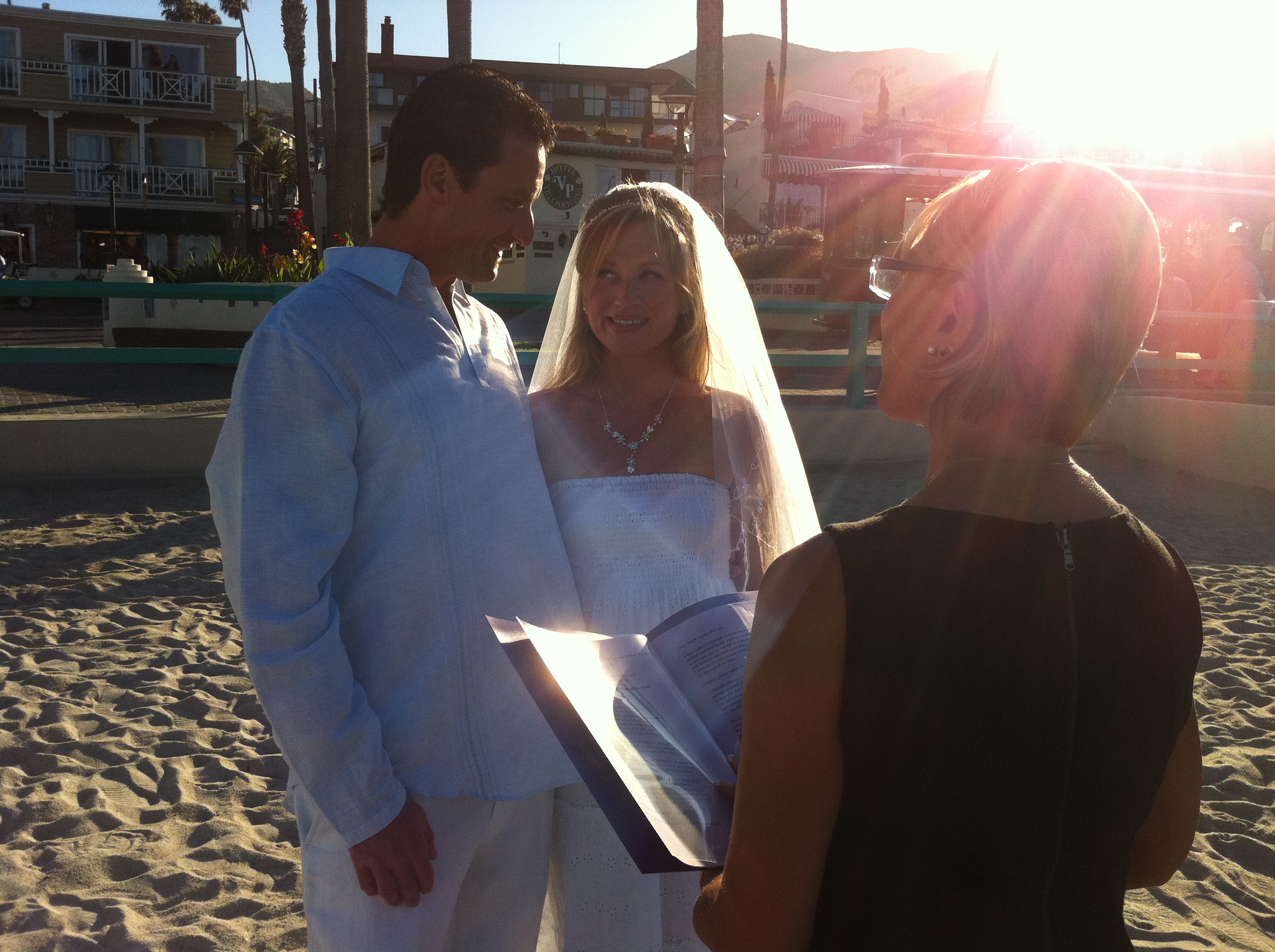
The strangest thing happened yesterday.  I was with my wife on Catalina, where we had gone for her birthday. We were staring into the blue horizon just beyond the boats into the marina, chatting, and eating ice cream.  It was early evening and the sun was gradually gaining ground on the hills behind us as shadows started to soar over Avolon.   As we inhaled our waffle-coned-goodness we noticed an odd sight to our left.  A couple, dressed in cloud-white, casually and softly walked down to the beach barefoot followed by a woman dressed in black.  “They couldn’t be getting married!?” I thought to myself, “No one is here!”.  It was so incredibly nonchalant.  I shared my thoughts with Alie as we assessed the situation.  After a few minutes we realized that our best guesses were wrong.  They were in fact getting married.  Once we realized this, and before their “service” was about to start we gave them a loud congratulatory cheer and caught their attention.   The groom came over to me and he and  I struck up a quick conversation.  Then he looked down into is hand and back up to me as he handed me a disposable camera.  He asked if I wouldn’t mind taking some pictures of the ceremony.  Honestly, I had to swallow my emotions of surprise.  I mean, the setting couldn’t be more beautiful – island beach at sunset and all, but a disposable camera, on your wedding?  You couldn’t have planned better?  I quickly repented from my internal arrogance and gladly obliged to be his wedding photographer.

As I fumbled around the sand and tried to capture the important moments I thought about the words of the officiant, reflected on my own wedding and vows, and began to wonder if this whole moment wasn’t a coincidence after all.  You see, I just finished becoming a liscenced Pastor, just got married myself – completing premarital courses including plenty of reading, and I’m currently preparing to perform ceremonies just like this!  Somewhere inside my mind I wondered why he wasn’t asking for my advice!   And then I realized, he doesn’t know me.

Just a few weeks ago I lived in a place where it felt like everyone knew me.  I had history with the community like a volume of scrapbooks.  I wasn’t just known in that place, I was esteemed, and I held the office of mentor/teacher/counselor/crisis-manager/trip planner/fun maker/big brother/leader/pastor/father.  Students, parents, peers, and adults grew to appreciate me as I did my best to care for them.  Now I’m away.  I’m in a self imposed exile of sorts, pursuing the vocation of all of those offices by hopefully making myself better at them through Seminary.  It’s been a little over a month.  It feels longer.  In that wedding moment on Catalina, I was none of those things, I was just a guy who happened to be nearby.  As I sit here and simmer on the memory of home, and the event on Catalina, I’m realizing how yesterdays wedding is a good illustration of the place I’m at and the lessons I’m learning.

Losing the title is good.  Whatever ego boost my identity has consumed in the past few years by being a “pastor”, it’s pretty much gone here.  Being in a new place means that nobody and nothing know me, not even the couple on the beach.  The people and the places are unfamiliar.  I’m no longer a leader who everyone is watching, I’m just me.  Just another face in the crowd, and certainly not the one up on stage.  This means who I am and what I do are no longer influenced by the pressure of maintaing my reputation and my morals – because no one is watching.  As you can imagine, this feels a little lonely, because deep down, like most of us, I like the attention.  Essentially in this new place, my true character has the freedom to shine, both the positive and the negative, both of which only add to my awareness of who I really am.  So… it’s an adjustment as I learn to be something new in a new place.  It’s definitely a challenge and it’s definitely worth it.

Knowing yourself is hard.  The most dangerous part of being a leader in a church, or really anything where people watch you for that matter, is that you start to become the title.  Whether its pastor, musician, actor, doctor, teacher, parent, or business man, we homo-sapiens have a strong tendency to fall in love with our profile pages instead of our true selves.  We love when people see us in a certain light.  We put on make up, dress super hip, and update our facebook info, all in the hopes that we can convince others of our success, our fame, our happiness, and our stories.  Underneath it, we’re also trying to convince ourselves.  But why?  Why are we so focused on that stuff?  Because knowing ourselves is hard.  It means that we have to look under untouched rocks and behind locked doors to reveal uncomfortable truths about who we are.  It also means that we risk our identity not coming from those titles we choose for ourselves, but rather who we are without them.  This loss comes with some necessary grief as we let go of the titles and personas, but ends up being surprisingly freeing as we come out from their limitations and burdens.  When we’re stripped of all our vanity, who are we really?  What makes us who we truly are?  Where does our identity originate?  On that beach, it didn’t matter if I was a professional baseball player, pastor, or photographer.  All that mattered was that I was there.

So back to the beach yesterday.  It was beautiful.  As the officiant pronounced the couple husband and wife, bells rang from the island hillside and I did my best to put into practice what I learned in High School photo.  Our new friends beamed with energy as they embarked on the life long  exploration of marriage, and I stood by not as a Pastor, but as a nameless photographer with a disposable camera.

After I ran out of pictures on the disposable, I snapped a bunch with my phone and emailed them to the groom.  Here’s a few.  Cheers to Dov and Mishell!

What if?

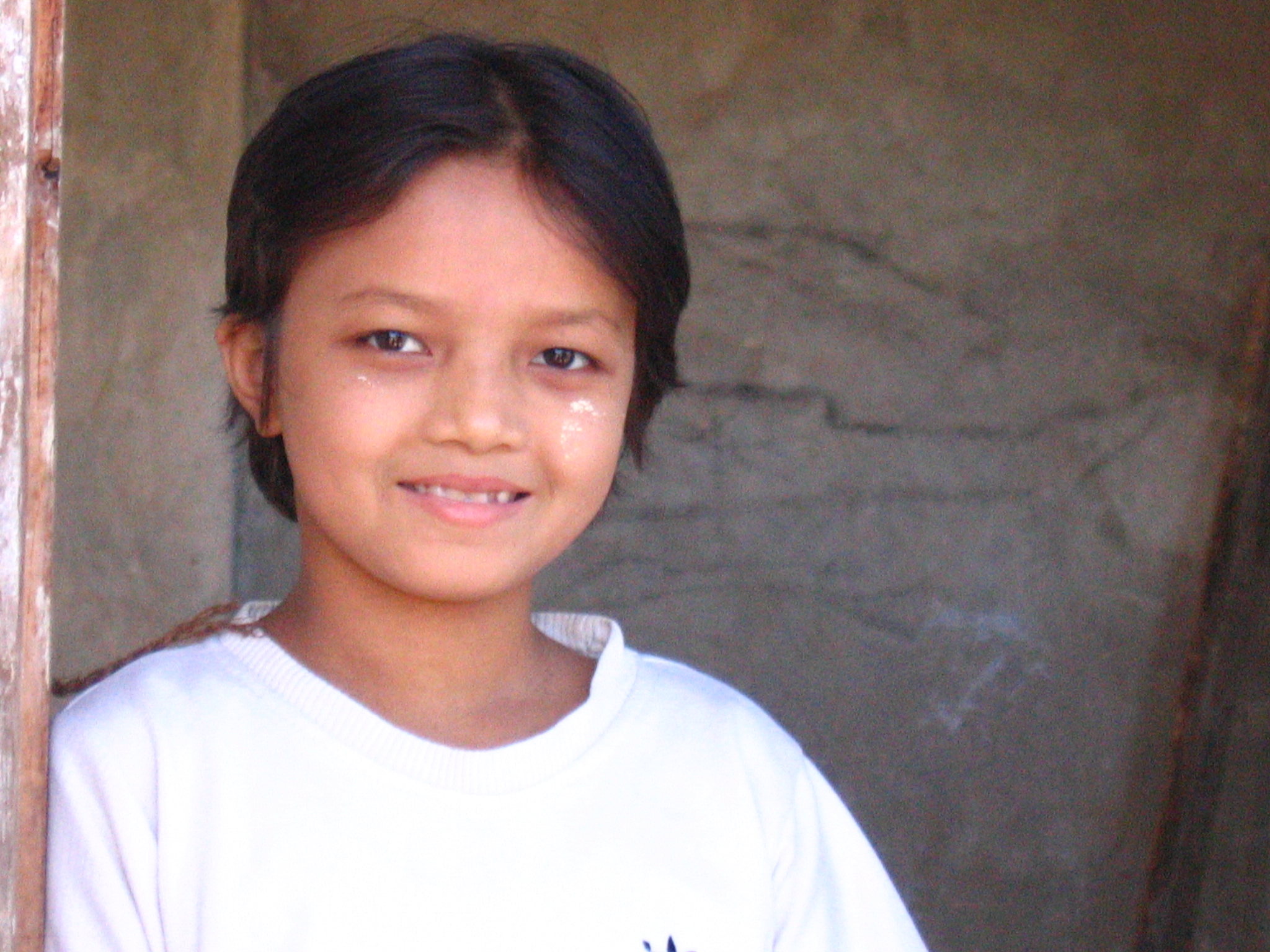
So there is this incredible person I’d love to tell you about.  It starts sad, then gets hopeful.  She lives in a country far away from America.  It’s pretty much as different and distant as you can get.  Her parents died of Aids when she was young.  Utter devastation.  How would she feed herself?  Where will she sleep?  How would she get an education?  Where will she go?  Who will protect her from the darkness of humanity?  In her home nation there aren’t many social services or organizations that take care of orphans so things looked pretty bleak; until a young Christian Pastor decided to change that.  Even though his religion is in the minority and isn’t allowed the same rights as others both culturally and legally, his passion for his ministry has been unceasing.  When he met this young girl he didn’t see a hopeless, dead end life; he saw an opportunity for grace, redemption and hope.  It didn’t take long for him to adopt this girl into his orphanage – you see in addition to running a persecuted faith community, he had already taken in dozens of children into his orphanage and forever changed their lives in unbelievably dramatic ways.  Our friend, the young girl, had no idea what lay ahead of her.  It didn’t take long before she was welcomed into her new family; the church, and given new parents, brothers, and sisters.  She learned of love, forgiveness, and salvation as she began to grow into a young woman.  Her once devastated story started becoming less tragic and more beautiful as she was given the opportunity to gain an education and provided food, shelter, and love.  In fact, each school year she somehow became top of her class, winning academic awards left and right – beyond all odds.  Her strongest subjects have been in biology and science, and she’s currently on track to become a doctor! This once hopeless and sad story’s momentum has changed so much that she is moving towards becoming an agent of physical healing to her people!  Unimaginable hope.  As she nears the end of high school, and this redemptive legacy continues, we find her plot-line coming to a crossroads.  You see, as amazing as the change in trajectory her life has taken is, it is not finished.  Typically, when students of her academic success complete their public education they go on to college.  For her, this doesn’t look like it’s an option – she’s an orphan after all.  How will she pay for it?  Who would take her into their school?  Uncertainty.

But what if her story didn’t end here.

What if we could find a way to continue her education in a state-of-the-art college?

What if this would-be orphan actually became a doctor?

What if you or I could continue this story?  What would it take?

What if?

Over the past 8 years I’ve been privileged to meet and know this girl personally and am currently in the dreaming/planning/praying stages of figuring our how to make this happen.  I find myself asking those questions.  She’s currently about 16 years old and has about year and a half window before she/we will need to have a college plan.  The top school with an incredible nursing program and amazing international department is tens of thousands of dollars; even still, I believe we can find a way to sponsor her education so she can become a doctor.  If you want to be the answer to the “what if?” question, contact me and lets do something!  If you’ve traveled with me in the past and you’ve met this amazing girl first hand and she’s been a blessing to you in some capacity, seriously consider joining me in this endeavor as we continue this story of hope.

As we look around our world there are so many “what if” questions.  I believe that the Master Artist painted and wove into our being the creative potential to not just ask the question, but be the answer, and that this is the grandest art in all of reality.  This is the life of faith.

What if?